---
title: Building a Culture of Safety to Transform Care
description: Join an insightful presentation on implementing the Risking Connection Change Model in behavioral health, transforming workplace culture for better care.
image: https://blog.traumaticstressinstitute.com/hubfs/Updated%20RWJ%20TSI%20Webinar%20LinkedIn.png
---
[](https://traumaticstressinstitute.org/)
- [About](https://www.traumaticstressinstitute.org/about-2/)
- [Vision - Mission - Values](https://www.traumaticstressinstitute.org/about-2/mission/)
- [Traumatic Stress Institute Staff](https://www.traumaticstressinstitute.org/about-2/staff/)
- [TSI Faculty Trainers](https://www.traumaticstressinstitute.org/about-2/rc-faculty-trainers/)
- [Sidran](https://www.traumaticstressinstitute.org/sidran-redirect/)
- [History of Traumatic Stress Institute](https://www.traumaticstressinstitute.org/about-2/company-history/)
- [Klingberg Family Centers](https://www.traumaticstressinstitute.org/about-2/klingberg-family-centers/)
- [Careers](https://www.traumaticstressinstitute.org/careers/)
- [Trauma-Informed Care](https://www.traumaticstressinstitute.org/what-is-trauma-informed-care/)
- [What Is Trauma Informed Care?](https://www.traumaticstressinstitute.org/what-is-trauma-informed-care/)
- [Trauma-Informed Care for Organizations](https://www.traumaticstressinstitute.org/trauma-informed-care-for-organizations/)
- Risking Connection
- [RC 25th Anniversary](https://www.traumaticstressinstitute.org/rc-25th-anniversary/)
- [Risking Connection Change Model to Trauma-Informed Care – Standard](https://www.traumaticstressinstitute.org/services/risking-connection-change-model/)
- [IDD Organizations & Systems](https://www.traumaticstressinstitute.org/services/risking-connection-change-model-idd/)
- [Current Client Agencies of the Traumatic Stress Institute](https://www.traumaticstressinstitute.org/services/whole-system-transformation-to-trauma-informed-care-tic/agencies-using-rc-as-training-model/)
- [Risking Connection® (RC) Training](https://www.traumaticstressinstitute.org/risking-connection-training/)
- [Restorative Approach® (RA) Training](https://www.traumaticstressinstitute.org/services/restorative-approach-training/)
- [ARTIC Scale](https://www.traumaticstressinstitute.org/the-artic-scale/)
- [Training Events](https://traumaticstressinstitute.org/events/)
- [Trainers' Corner](https://traumaticstressinstitute.org/trainers-corner/)
- [Blog](https://blog.traumaticstressinstitute.com/blog)
- [Books](https://www.traumaticstressinstitute.org/books/)
- [Helplines](https://www.traumaticstressinstitute.org/hotline-list/)
- [Contact](https://traumaticstressinstitute.org/contact/)
### Subscribe to updates
### Categories
- [Whole-System Change (53)](https://blog.traumaticstressinstitute.com/blog/tag/whole-system-change)
- [Measurement & Research (28)](https://blog.traumaticstressinstitute.com/blog/tag/measurement-research)
- [Mindfulness (24)](https://blog.traumaticstressinstitute.com/blog/tag/mindfulness)
- [IDD Organizations (11)](https://blog.traumaticstressinstitute.com/blog/tag/idd-organizations)
- [Crisis Response (8)](https://blog.traumaticstressinstitute.com/blog/tag/crisis-response)
- [Head Start (8)](https://blog.traumaticstressinstitute.com/blog/tag/head-start)
- [Insider (1)](https://blog.traumaticstressinstitute.com/blog/tag/insider)
See all
This is a search field with an auto-suggest feature attached.
- There are no suggestions because the search field is empty.
### Recent Posts
[](https://blog.traumaticstressinstitute.com/blog/building-a-culture-of-safety-to-transform-care)
# [Building a Culture of Safety to Transform Care](https://blog.traumaticstressinstitute.com/blog/building-a-culture-of-safety-to-transform-care)
July 30, 2026 / by [Christine Greene](https://blog.traumaticstressinstitute.com/blog/author/christine-greene)
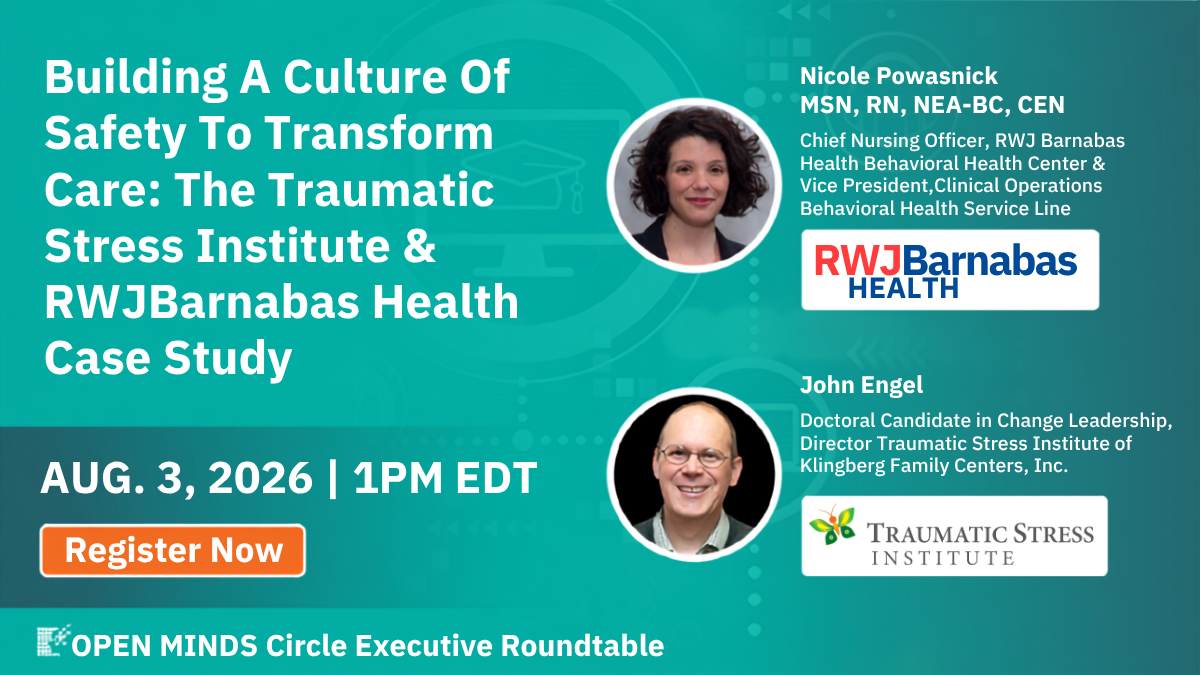
Coming up on August 3rd at 1 p.m. ET, [join an OPEN MINDS Circle](https://openminds.com/event/building-a-culture-of-safety-to-transform-care-the-traumatic-stress-institute-rwjbarnabas-health-case-study/) for a one-hour live presentation with [Nicole Powasnick](https://www.linkedin.com/in/nicole-powasnick-b394652ba/), Chief Nursing Officer of [RWJBarnabas Health (RWJBH)](https://www.rwjbh.org/) Behavioral Health Center and Vice President of Clinical Operations for the Behavioral Health Service Line at RWJBarnabas Health, and [John Engel](https://www.linkedin.com/in/johnpengel/), Director of the [Traumatic Stress Institute (TSI)](https://www.traumaticstressinstitute.org/) of [Klingberg Family Centers](https://klingberg.org/).
They will share how their organizations partnered to implement the [Risking Connection Change Model (RCCM)](https://www.traumaticstressinstitute.org/services/risking-connection-change-model/) – an 18-to-24-month roadmap for total organizational transformation – across behavioral health units and emergency departments at eight RWJBH sites, including data to illustrate its impact.
Get a sneak preview through this excerpt from a May webinar at TSI, which also included input from other RWJBarnabas Health staff about their experiences of the implementation, its impact on both staff and patients, and the fundamental shift in their workplace culture.
Rather than approaching trauma-informed care as a one-time training, RWJBH and TSI treated implementation as an organization-wide commitment. The result was a more consistent framework for supporting both staff and patients in high-pressure care environments.
The Risking Connection Change Model offers a structured path for organizations that want to move beyond isolated initiatives and toward long-term, sustainable transformation. Across participating sites, the model helped create a shared language around trauma, strengthen staff confidence, and support a more regulated, responsive workplace culture. For behavioral health and emergency department teams, that kind of alignment matters. When staff understand how trauma affects behavior, decision-making, and relationships, they are better equipped to respond with empathy, clarity, and accountability.
The webinar excerpt also highlights an important truth about systems change: meaningful outcomes depend on supporting the workforce as much as the people they serve. As organizations face burnout, turnover, and increasing clinical complexity, trauma-informed implementation can become a powerful strategy for improving staff well-being while also strengthening patient care. In this preview, staff from RWJBarnabas Health reflect on what it took to build momentum, what changed in their daily practice, and why long-term investment in culture can lead to measurable impact.
Whether you are leading a hospital-based behavioral health program, overseeing staff development, or exploring trauma-informed change across service systems, this webinar will offer valuable insight into what implementation looks like in practice. It is an opportunity to learn from a real-world partnership, hear lessons from the field, and consider how a whole-system approach can support safer, more connected care. [Register Here](https://openminds.com/event/building-a-culture-of-safety-to-transform-care-the-traumatic-stress-institute-rwjbarnabas-health-case-study/).
### Discover what's possible with trauma-informed systems change.
### [](https://blog.traumaticstressinstitute.com/hs/cta/wi/redirect?encryptedPayload=AVxigLIyZHhNJCRRw9affGTvpGPJlobBgxrVPrxiYhrpnEiKabuwmwWVR%2B8kiGkyS3ySUARQDewm%2Bl20Gccg8uuKnm%2Bu%2FI8zk9WliJhtej%2FMIIYzMRQhqoAr6eZM%2B51P1HYo8XhcLO5WZzS0Jw5QFDTvULn0GVOrOyAem6ZLBtDjmA6GZc%2F%2FgeB6GYJBOpkDXYEfRlMJd0dx94luT8frBDkqPXlSY%2FR%2FWljzf6iI20frsBgXIuL%2FWSs%3D&webInteractiveContentId=215100703788&portalId=6854647)
Tags: [Whole-System Change](https://blog.traumaticstressinstitute.com/blog/topic/whole-system-change)

#### Written by [Christine Greene](https://blog.traumaticstressinstitute.com/blog/author/christine-greene)
Chris Greene is the Marketing Coordinator for the Traumatic Stress Institute of Klingberg Family Centers. Her work includes marketing and implementing systems improvements in order to enhance clients’ experience, all with the goal of building a sense of community. Projects have included renovation of the TSI website; improvements in brand cohesion and recognition; creation of an RC community newsletter and blog; increased LinkedIn presence; engagement of new vendors; collaboration with other TSI staff to launch a CRM system that increased our ability to manage growing complexities around implementation; and curriculum development.
Copyright 2026 | Traumatic Stress Institute
```json
{
"@context" : "https://schema.org",
"@type" : "VideoObject",
"caption" : {
"@type" : "MediaObject",
"contentUrl" : "https://blog.traumaticstressinstitute.com/media-transcripts/218357696948/en.vtt",
"inLanguage" : "en",
"name" : "en Captions"
},
"contentUrl" : "https://6854647.fs1.hubspotusercontent-na1.net/hubfs/6854647/video_assets/218357696948/inherited/web_optimized.mp4",
"dateModified" : "2026-08-17T13:54:54.077Z",
"description" : "RWJBarnabas Health and the Traumatic Stress Institute partnered to implement the Risking Connection Change Model (RCCM) – an 18-to-24-month roadmap for total organizational transformation – across behavioral health units and emergency departments at eight RWJBH sites. Get a sneak preview through this excerpt from a May webinar at TSI, which also included input from staff about their experiences, RCCM's impact on both staff and patients, and the fundamental shift in their workplace culture.",
"duration" : "PT2M19.033S",
"height" : 1080,
"name" : "Risking Connection Change Model at RWJBarnabas Health",
"thumbnailUrl" : "https://api-na1.hubspot.com/filemanager/api/v3/files/thumbnail-redirect/218357696948?portalId=6854647&size=medium",
"uploadDate" : "2026-07-30T13:56:32.632Z",
"width" : 1920
}
```